

In 3 articles we are going to discover everything about epoxy river tables, including materials, manufacturing process, wood selection, epoxy resin types, finishing techniques, maintenancetips, and expert buying advices
Introduction
Epoxy river tables have transformed modern furniture design by combining the warmth of natural hardwood with the crystal-clear beauty of epoxy resin. What started as a niche woodworking trend has evolved into one of the most sought-after furniture styles in luxury homes, commercial interiors, restaurants, offices, and hospitality spaces worldwide
Each epoxy river table is unique because no two slabs of wood share the same grain, texture, live edge, or natural imperfections. When these organic characteristics are paired with premium casting epoxy resin, the result is a functional work of art that cannot be mass-produces
Whether you're a homeowner searching for a stunning dining table, an interior designer looking for statement furniture, or a woodworking enthusiast interested in learning the manufacturing process, this comprehensive guide covers everything you need to know about epoxy river tables
?What Is an Epoxy River Table
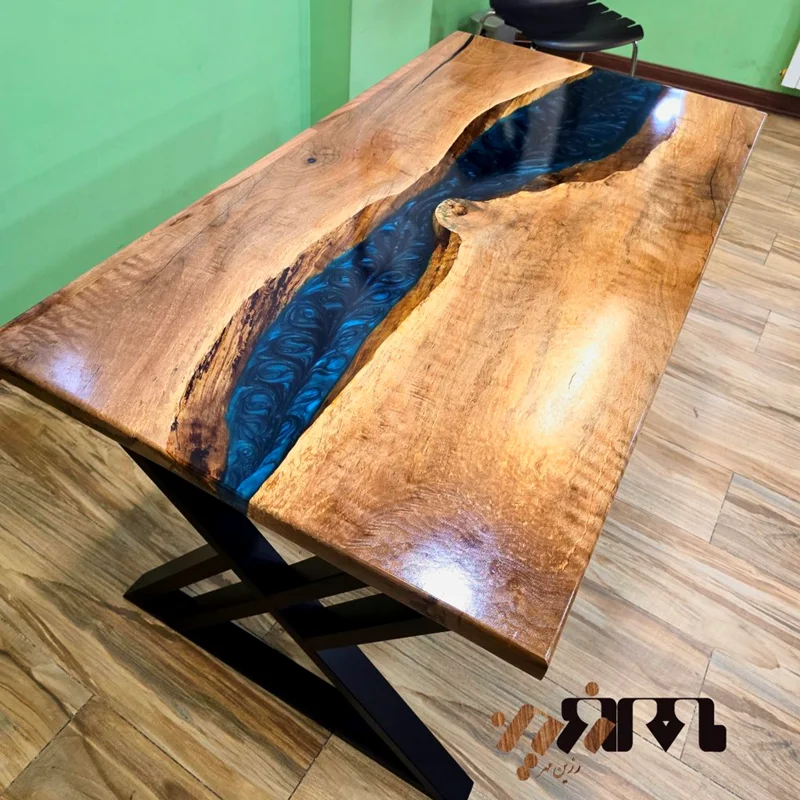
An epoxy river table is a handcrafted furniture piece created by joining two or more live-edge wood slabs with epoxy resin poured between them. The resin forms what resembles a flowing river, giving the table its distinctive appearance
Unlike traditional solid wood furniture, river tables celebrate the natural imperfections of wood rather than hiding them. Cracks, knots, voids, bark inclusions, and irregular edges become design features that enhance the final product
The epoxy resin fills these spaces while creating remarkable depth, transparency, and durability
Why Are Epoxy River Tables So
?Popular
The growing popularity of epoxy river tables comes from their ability to combine nature with modern craftsmanship
:Some of the biggest reasons include
Every table is completely unique🔹️
Live-edge wood preserves natural beauty🔹️
Epoxy resin adds exceptional strength🔹️
Endless customization options🔹️
Suitable for luxury interior design🔹️
Long-lasting durability🔹️
Water-resistant surface🔹️
Easy maintenance🔹️
Modern artistic appearance🔹️
High investment value🔹️
Unlike factory-produced furniture, handmade epoxy river tables become conversation pieces in any room
The History of River Tables
Although epoxy resin has been used in industrial applications since the mid-20th century, river tables became popular during the last decade thanks to innovative furniture makers who experimented with combining live-edge hardwood slabs and clear casting resin
Today, river tables represent one of the fastest-growing segments of luxury handcrafted furniture
Their popularity has expanded beyond
dining tables into
Coffee tabless-
Conference tables-
Office desks-
Kitchen islands-
Reception desks-
Restaurant furniture-
Bar tops-
Console tables-
Side tables-
Wall art-
Anatomy of an Epoxy River Table
Understanding the individual components helps explain why these tables are both beautiful and durable
Live Edge Hardwood
The wood provides warmth, character, and structural integrity
Unlike straight-cut lumber, live-edge slabs preserve the tree's natural outer contour
:Popular wood species include
Walnut
Black walnut is considered the premium choice for river tables because of its rich chocolate color, elegant grain, and excellent stability
Oak
Oak offers remarkable durability with distinctive grain patterns that pair beautifully with transparent epoxy
Maple
Maple's lighter color creates dramatic contrast with colored epoxy resin
Ash
Ash is known for its strength and attractive grain while remaining relatively affordable
Elm
Elm features flowing grain patterns and exceptional visual movement
Olive Wood
Olive wood produces luxurious river tables thanks to its dramatic figure and natural color variation
Poplar
Poplar is often selected for colorful resin projects because its neutral tone highlights pigmented epoxy
Epoxy Resin
The resin serves multiple functions
It fills natural voids▪️
Stabilizes weak areas▪️
Creates the famous "river."▪️
Protects the wood▪️
Adds incredible visual depth▪️
:Premium casting epoxy typically offers
UV resistance🔸️
Crystal clarity🔸️
Bubble release technology🔸️
Low shrinkage🔸️
High hardness🔸️
Excellent polishing properties🔸️
Types of Epoxy Resin Used
Not every epoxy is suitable for river tables
Professional furniture makers generally use three categories
Deep Pour Epoxy Resin🔷️
Designed for thick pours-
Ideal for large river gaps-
Produces minimal heat during curing-
Excellent transparency-
Casting Epoxy
The industry standard for river tables-
Suitable for medium-depth pours-
High optical clarity-
Strong mechanical properties-
Tabletop Epoxy
Applied as the final protective coating-
Provides scratch resistance-
Creates a glossy finish-
Improves UV protection-
Choosing the Perfect Wood
Wood selection significantly influences the appearance, durability, and longevity of the finished table
Professionals evaluate several characteristics before choosing slabs
Moisture Content
Properly kiln-dried wood should typically have a moisture content between 6% and 10%. Excess moisture can lead to movement, cracking, or bonding issues after the resin cures
Grain Pattern
Straight grain creates a clean, contemporary look, while figured grain—such as curly, burl, or spalted wood—adds dramatic visual appeal
Structural Stability
Large cracks and voids can be incorporated into the design, but the slab itself must remain structurally sound to support long-term use
Live Edge Quality
The natural contour of the slab defines the "river." Symmetrical or complementary live edges generally produce the most balanced and visually striking layouts
Essential Materials Required
Professional epoxy river tables require carefully selected materials to ensure both beauty and durability
:The primary materials include
Kiln-dried hardwood slabs🔹️
Deep pour epoxy resin🔹️
Tabletop epoxy🔹️
Pigments or metallic powders (optional)🔹️
Black epoxy tint🔹️
Mold release wax🔹️
HDPE mold boards🔹️
Silicone sealant🔹️
Mixing buckets🔹️
Digital scale🔹️
Wood stabilizer🔹️
Sandpaper in multiple grits🔹️
Hardwax oil or polyurethane finish🔹️
Polishing compound🔹️
Each component contributes to the final quality of the piece, and using premium-grade materials helps minimize defects such as bubbles, yellowing, or surface imperfections
Professional Tools Used by Furniture Makers
Creating a flawless epoxy river table requires precision equipment in addition to quality materials
:Common tools include
CNC router or slab flattening router sled🔸️
Thickness planer🔸️
Belt sander🔸️
Random orbital sander🔸️
Track saw🔸️
Circular saw🔸️
Router🔸️
Heat gun🔸️
Propane torch (for bubble removal)🔸️
Moisture meter🔸️
Digital thermometer🔸️
Infrared temperature gun🔸️
Vacuum chamber (optional)🔸️
Pressure pot (for smaller resin components)🔸️
Clamps🔸️
Measuring squares🔸️
Protective respirator🔸️
Nitrile gloves🔸️
Safety glasses🔸️
Using the right tools not only improves efficiency but also ensures a professional finish that meets the expectations of high-end clients
Step-by-Step: How Epoxy River Tables Are Made
The manufacturing process combines woodworking expertise with careful resin handling. Every stage plays a critical role in the final appearance and structural performance of the table
Step 1: Selecting the Wood
The process begins with selecting premium hardwood slabs. Craftsmen look for attractive grain patterns, stable moisture content, and complementary live edges that will form the river shape. Each slab is inspected for cracks, knots, and natural features that can enhance the final design
Step 2: Drying and Acclimating
Even kiln-dried wood is typically allowed to acclimate to the workshop environment before production begins. This helps reduce movement caused by changes in humidity and temperature
Step 3: Preparing the Slabs
The bark is removed, loose fibers are cleaned away, and the live edges are refined while preserving their natural character. Any weak sections are stabilized, and the slabs are cut to their approximate dimensions before flattening
دیدگاه خود را بنویسید